
grief doesn’t start at death
the weight of ordinary things

💌 hi, you’ve found “this is not a column”! it drifts between diary, essay, and article, basically the cultural clutter and loose thoughts i refuse to keep to myself.
before you read: this essay touches on heavy themes like grief. take care of yourself while reading
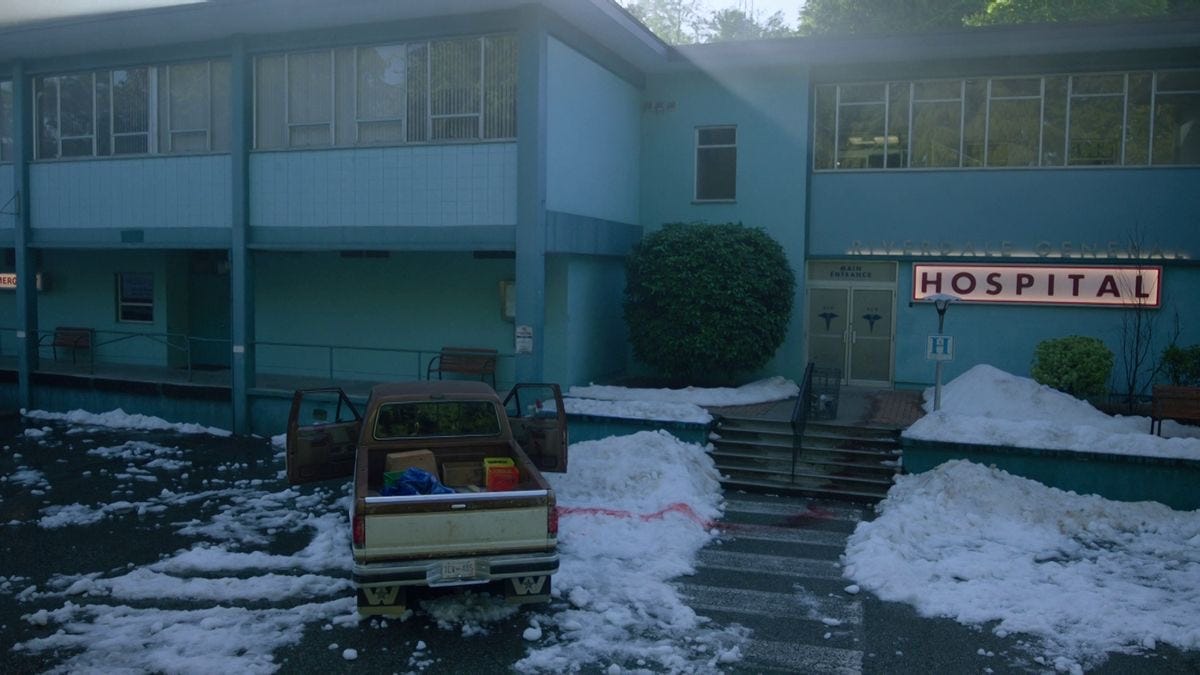
i met hugo on a february evening that had seeped into everything, the walls, our coats, even the air of the hospital.
snowmelt clung to the rubber mats at the entrance, tracked in by shoes and boots until the waiting room smelled of wet wool and salt. the sharp sting of disinfectant pressed into my nose, chlorine and ammonia layered so heavy they burned my throat. but underneath it lingered something sweeter, thick and spoiled, the faint odor of bodies already breaking down behind closed doors.
the fluorescent lights hummed above in a long, steady note that settled into the jaw. every few minutes sneakers shrieked across the linoleum, thin and piercing, and hugo flinched each time, his shoulders twitching as though the sound could peel skin. he sat folded into the corner, the chair curving him inward, his jacket damp at the cuffs. his features were soft, almost gentle, the kind of face that once might have belonged to a man who worked with his hands in the soil or read stories aloud at bedtime. but shadows had fastened themselves to him, clinging beneath his eyes, deepening into bruised crescents that blurred into his beard. he looked like someone who had lived three hundred lives at once, and none of them had been kind.
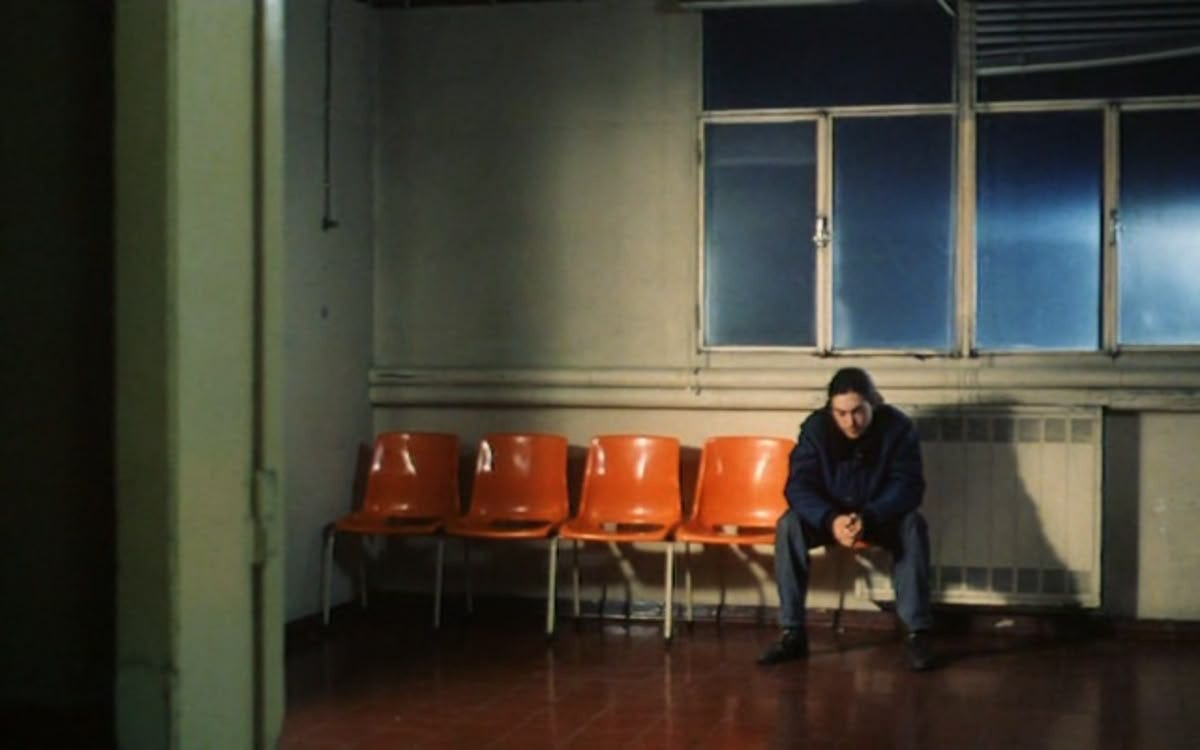
in his hands he cupped a juice box, apple, the carton sagging in on itself, the straw bent sideways, dripping pulp across his thumb. he didn’t drink it. he only held it, careful and slow, like warmth might seep into it from his palms.
i paced the room once, twice, my stomach turning with the smell, the lights, the silence, until i finally broke it.
“sorry,” i asked, my voice rough, “do you know where the coffee machine is?”
he looked up at me, slowly, as if lifting weight from deep water. his eyes were bloodshot, rimmed with purple, soft but exhausted.
“down the hall,” he said. “left at the vending machines. you’ll see it.”
“thanks,” i breathed, the word leaving too quickly, too relieved.
he kept looking at me, and then his mouth moved again.
“long night.”
i nodded. “yeah. grandfather. liver cancer. it spread to his lungs. tonight they’re removing part of his liver.” the words fell bluntly, factual stones on tile.
hugo’s gaze dropped back to the carton in his hands. his thumb pressed into the dented side, juice sliding sticky across his skin. when he spoke again, his voice was low, almost tender, but frayed at the edges.
“my daughter. she’s three. lymphoma. left side of her brain.”
the juice box wheezed in his grip, a small, collapsing gasp that scraped the silence raw. across the hall, the vending machine flickered, its rows of apple juice glowing cold behind plexiglas.


i met lisa a few times after that, in the blurred hours of waiting, between scans and surgeries, in the places where families crossed paths without meaning to. she was bubbly, impossibly so, as if her body had not yet taught her what it meant to betray her. she usually wore pigtails, not of her own hair, but of the wig her father tied for her in the mornings. the parts were never even, the elastics always crooked, but she didn’t care.
children get written about as sunshine too easily, stretched into metaphors about dawn and renewal, but lisa truly was, sunlight bottled in a small, fragile body. her laughter rang down corridors thick with bleach, slicing through the hum of machines, startling in its clarity. she was friendly, curious, sweet. once she asked me why the nurses’ shoes squeaked, another time why i always carried a newspaper.
each time i saw her i felt the sting behind my eyes, that hot pressure i swallowed back so it wouldn’t spill over. she was so undeserving of all of it, the needles, the scans, the too-big blanket draped around her shoulders. if i, only a stranger at the periphery of her story, had to fight tears at the sight of her pigtails and shy smile, i could only imagine how hugo felt.
he carried that grief in his face, in the shadows clinging beneath his eyes, but he carried her light too. you could see it in the way he looked at her, as if she were the only thing keeping him upright, as if every breath he took depended on the sound of her laughter.
grief doesn’t start at death. it begins long before.
it begins with the test results, the scan, the word you can’t say out loud. it begins in waiting rooms that smell like bleach and stale coffee, in the fluorescent hum that burrows into your skull, in the sight of a body already surrendering piece by piece. you think grief is the funeral. the black clothes, the flowers, the ashes.
but grief is slower, meaner. it creeps in when you watch someone forget their appetite. when the strong voice turns thin. when the hands that once carried you now tremble under the weight of a spoon. they tell you to prepare. how do you prepare to watch someone vanish while still sitting across from you? how do you prepare for a chair that holds them and yet doesn’t?
i don’t understand how i celebrated my grandfather’s birthday, how we cut the cake, laughed, took photographs, and then, in the span of two years, i watched him shrink into skin and bone. one day he was a man. the next he was an outline. every meal untouched was a small funeral.
every sigh, every silence, another nail driven in. i grieve not just the man he will one day stop being, but all the men he has already stopped being along the way. grief doesn’t start at death. it starts with the first sign of loss, and from then on it does not let you go. it moves in early, it unpacks its bags, and it stays.
i met hugo the last time on a cold december night, just after my twenty-second birthday. the corridors smelled of bleach and floor polish, sharp enough to sting, but beneath it lingered the sweetness of decay, that faint, sour note no cleaning solution ever managed to cover. my grandfather’s cancer hadn’t spread or grown. a terrible good sign, the doctors called it. he was being released, sent home, only immunotherapy left on his schedule. we were ecstatic. i remember walking down the hallway with relief burning in my chest, almost dizzy with it, like i had been holding my breath for two years and was finally allowed to exhale.
hugo was there in the corridor, his head bowed over the usual apple juice. his shoulders were curved inward, his whole body pressed into itself, as if the weight of the carton alone was too much to bear. i was too caught up in my own happiness, reckless with it, and i blurted out the words before i thought:
“grandpa is getting released! how is lisa?”
he looked up, and my stomach dropped.
if i could describe grief, it would be a replica of the face i saw in that moment. his eyes were hollowed out, the skin beneath them dark as bruises, shadows clinging to him as if they had claimed him for their own. his beard was still patchy, unkempt, growing into the same darkness that pulled at the lines of his face.
my body knew what my mind tried to resist. my chest constricted, bile burned in my throat, the air itself turned heavy and sour. i couldn’t find words.
lisa died peacefully on the thirteenth of december, four days before her fourth birthday, in the presence of her family.
the face of hugo in that hallway haunts me still. not just because it was the face of a grieving father, but because it was the face of grief itself, raw, emptied, stripped down to nothing but absence.
i remember his words distinctly, him cradling the apple juice like it was the only thing left of her.
“she never finished it.”
those four words tore through me. they showed me that grief isn’t only the hollow absence, the emotions with nowhere to go. grief is what lingers, what refuses to leave. it is what was once natural, ordinary, part of a routine, suddenly transformed into something sacred and unbearable.
her favourite apple juice, still stacked in neat rows behind the vending machine, still sitting half-drunk in the cup holder of the car.
her sparkly sneakers, the ones with scuffed soles and glitter worn off the toes, waiting by the door as if she might run out to play at any moment.
her wig left on the bed, parted into crooked pigtails by her father’s hands, elastic bands still stretched around synthetic hair that no longer has a head to hold.
grief lives in these remnants. it clings to what is left behind, to the small things that feel too trivial to matter and yet weigh more than coffins. it’s not just that lisa is gone, it’s that her apple juice still exists, her shoes still sit where she kicked them off, her wig still rests where she last laid it down.
that is the cruelty of grief: it does not only steal, it leaves. it leaves reminders so ordinary they split you open every time you see them.
this is for lisa. four years was not enough. it should have been decades of birthdays, laughter, pigtails and play. but i hope wherever you are now, the light never fades. i hope your apple juice stays cold and sweet. i hope you finally get to finish it.
your writing is mesmerisingly heartbreaking.
beautiful as always!!!’